

Report: NIC-Japan Seminar Series: Foreign Credential Evaluation (FCE) Training Special Program
Overseas
The National Information Center for Academic Recognition Japan (NIC-Japan) held the "NIC-Japan Seminar Series: FCE Training Special Program" in Osaka in a face-to face format on September 10, 2026. This program was organized as a follow-up initiative to the "NIC-Japan Seminar Series: FCE Training Program," which had been conducted online in July 2026.
<Purpose of the Program>
This program was designed for faculty and administrative staff at higher education institutions who are responsible for admission eligibility reviews and entrance qualification assessments for applicants with foreign educational backgrounds. It aimed to promote understanding of Foreign Credential Evaluation (FCE) and enhance professional expertise in this area. Participants explored the principles of the Global Convention and the Tokyo Convention, relevant laws and regulations, and the position of qualifications within different national education systems. Through group discussions and practical exercises, participants developed perspectives for addressing challenges encountered in day-to-day evaluation work. The program also encouraged information sharing, exchange of experiences, and network building among participants.
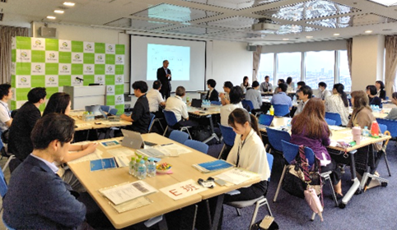
Opening address by NIAD-QE President Hattori
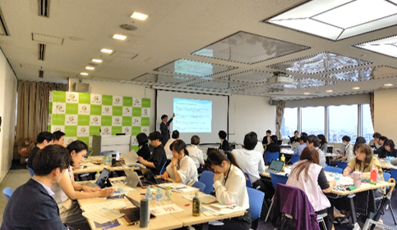
FCE Lecture
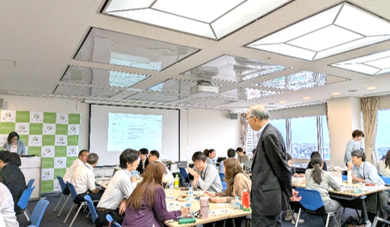
Group Discussion
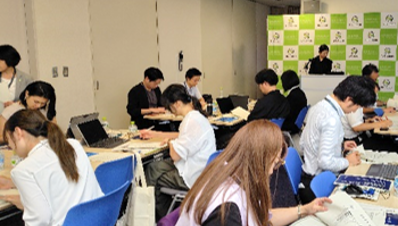
FCE Workshop
<Overview>
▷Session 1: "Perspectives from University FCE Practice," "Functions and Prospects of NQFs," and "What Has Changed Under the UNESCO Conventions?"
Speaker: HOTTA Taiji, Senior Advisor, National Information Center for Academic Recognition Japan (NIC-Japan); NODA Ayaka, Professor, National Institution for Academic Degree and Quality Enhancement of Higher Education (NIAD-QE); MORI Rie, Executive Director, National Information Center for Academic Recognition Japan (NIC-Japan)
Session 1 provided a comprehensive introduction to FCE, covering practical challenges, international approaches to qualification recognition, and their relationship with domestic systems. Dr. HOTTA introduced current challenges in conducting FCE and highlighted important compliance considerations in university practice. Professor NODA presented an overview of the Japanese Qualifications Framework (JEQF) and explained the role and significance of National Qualifications Frameworks (NQFs) as tools for understanding and comparing qualifications across countries. Executive Director MORI discussed approaches to recognition under the Tokyo Convention and the Global Convention and examined considerations arising at the intersection of international principles and Japan's higher education system. Through these presentations, participants gained practical, institutional, and international perspectives on FCE in preparation for the subsequent group discussion.
▷Group Discussion 1
Participants worked in groups to discuss case studies related to the practical and policy considerations presented in Session 1. They exchanged views on institutional practices and decision-making processes and explored different approaches to evaluating foreign qualifications. The discussion provided a valuable opportunity to learn from the experiences and perspectives of colleagues from other institutions.
▷Session 2: "The Chinese Education System and Higher Education Qualifications - Connections to Japanese Universities and Key Considerations Surrounding International High Schools"
Speaker: LI Min, Professor, NIAD-QE
Professor LI gave an overview of the Chinese education system and qualification structure, including pathways to Japanese higher education, student registration systems, and methods for verifying educational qualifications. Recent developments involving international high schools were also introduced. She also emphasized that confirming admission eligibility through FCE should be distinguished from assessing academic ability and aptitude in admissions selection. During the subsequent Q&A session, participants discussed topics such as student registration systems, the operation of international high schools, qualifications for graduate admission, and the verification of academic documents.
▷Session 3: Lecture and Workshop (Practical FCE Exercise)
Speaker: Associate Professor HAN Liyou, Kyoto University; Ms. HATTORI Hiroko, Deputy Director, Planning Office, Division of Graduate Studies, Kyoto University; Ms. KAYA Minori, Admissions Advisor, Admissions Assistance Office, Planning Office, Division of Graduate Studies, Kyoto University
Session 3 provided practical insights into FCE at universities through lectures and a workshop. Associate Professor HAN introduced the background to the establishment of the Kyoto University Admissions Assistance Office (AAO) and its initiatives. Ms. HATTORI explained the university's support framework for international student admissions, while Ms. KAYA provided a practical overview of the AAO application system and procedures for reviewing academic records and supporting documents. Participants then took part in a case-study-based workshop, where they evaluated the status of educational institutions, the position of qualifications within education systems, access to higher education, and the authenticity of submitted documents. By combining lectures with the workshop, the session strengthened participants' understanding of key concepts and decision-making processes in FCE practice.
▷Group Discussion 2
Following the workshop, participants engaged in group discussions to share their case-study analyses and the rationale behind their decisions. They exchanged views on the information required for evaluation and on approaches to decision-making, while also discussing institutional structures and challenges at their respective universities. The session reinforced the importance of professional networking and information sharing among FCE practitioners.
In closing, NIAD-QE Vice President YAMADA Akira emphasized the importance of understanding not only individual qualifications but also their position within education systems, pathways to higher education, and quality assurance mechanisms. He also highlighted the value of accumulated institutional knowledge, information sharing among practitioners, and the continued development of professional networks. He expressed his appreciation to the speakers and concluded by acknowledging the careful and dedicated efforts of university staff engaged in day-to-day FCE work. He also reaffirmed NIC-Japan's commitment to continuing to provide practitioners with an opportunity to gain practical knowledge and insights that can be applied in future FCE-related work.